Loudness
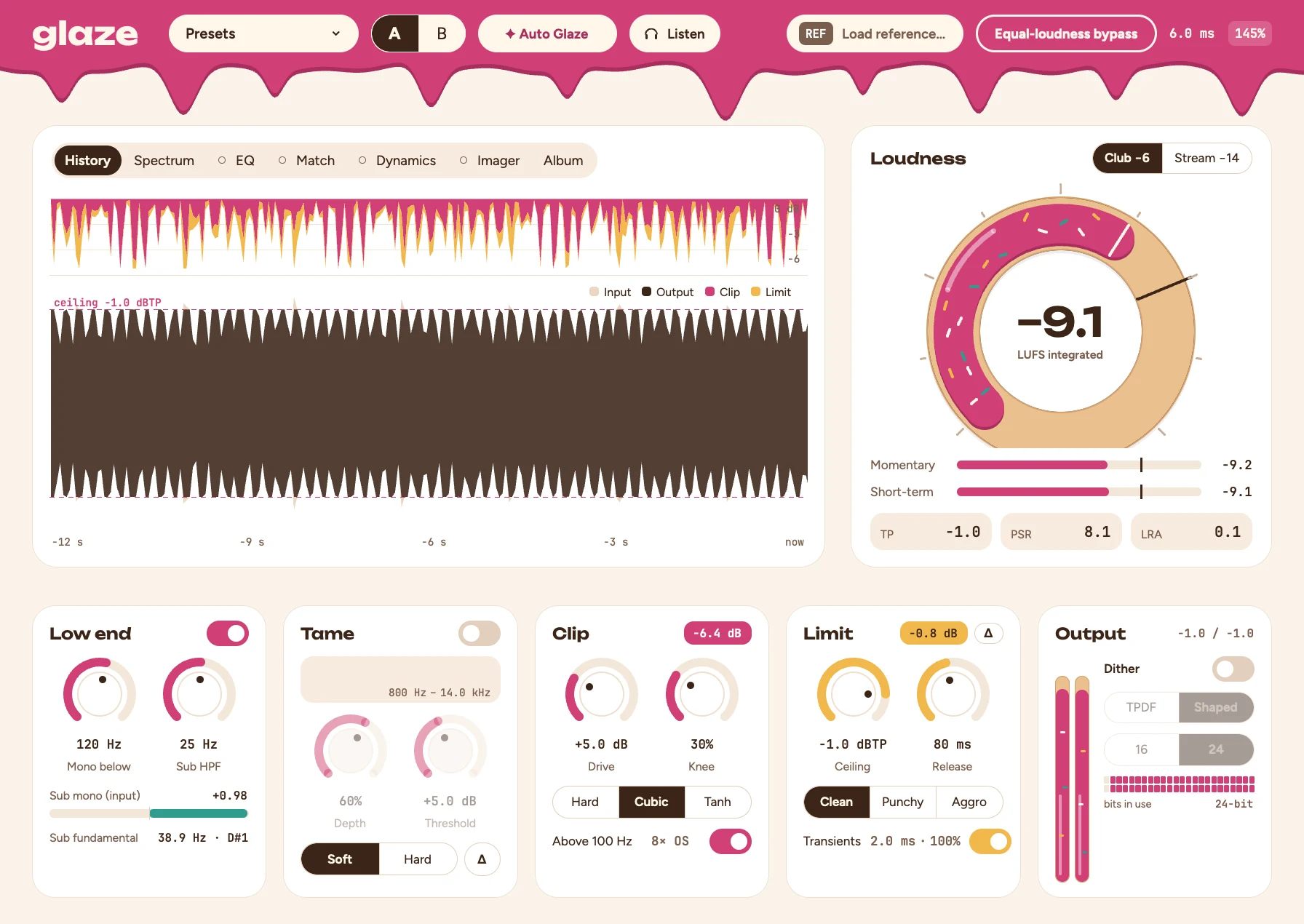
Momentary, short-term and gated integrated loudness, LRA, 4× true peak and PSR, to BS.1770-4 and EBU R128. Aim at Club −6 or Stream −14.
Scroll to glaze
Glaze takes your mix to a club-loud or streaming-ready master in one window. Clip, limit, EQ and widen it, then hear it the way Spotify, YouTube and a phone speaker will, before you export.
Auto Glaze
Glaze listens for 12 seconds, works out the settings off the audio thread, and loads them into the A/B slot you're not on, with a card explaining every choice.
Low end set around your sub's fundamental.
Tame switched on only if it hears ringing.
Limiter style and release picked from how often the hits come.
The least drive that reaches your target, at the ceiling you set.
It sizes the glaze to the mix: how far it is from the target and how much crest it has left. If the target would cross a level's caps, it stops short and tells you so.
The chain
Latency is fixed at 6.0 ms at 48 kHz and never changes with settings, so your host never restarts the plugin.
The tour
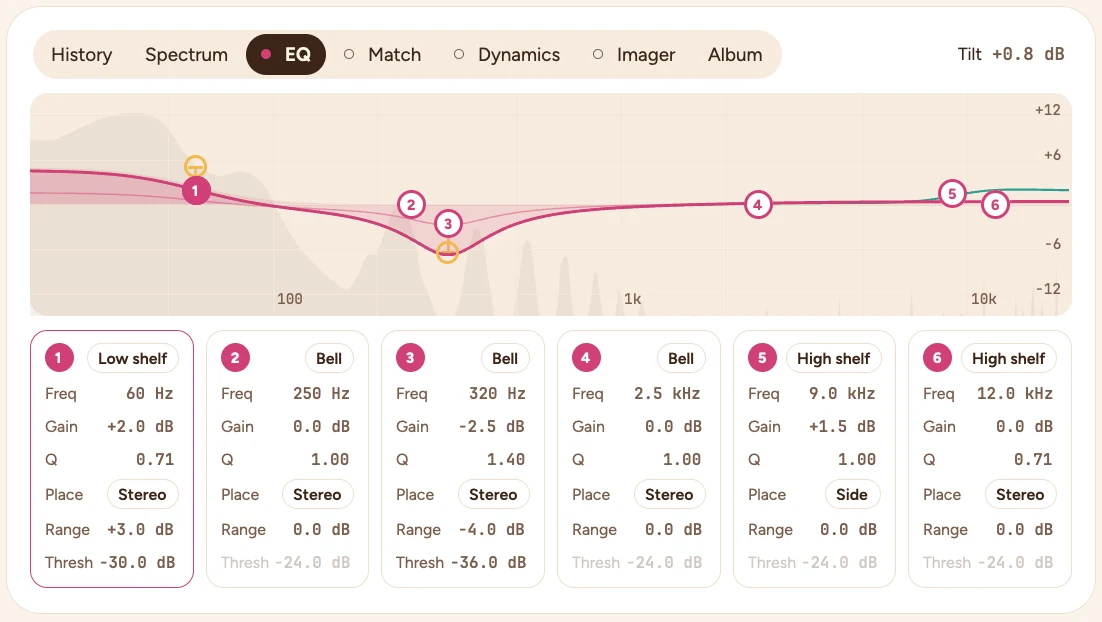
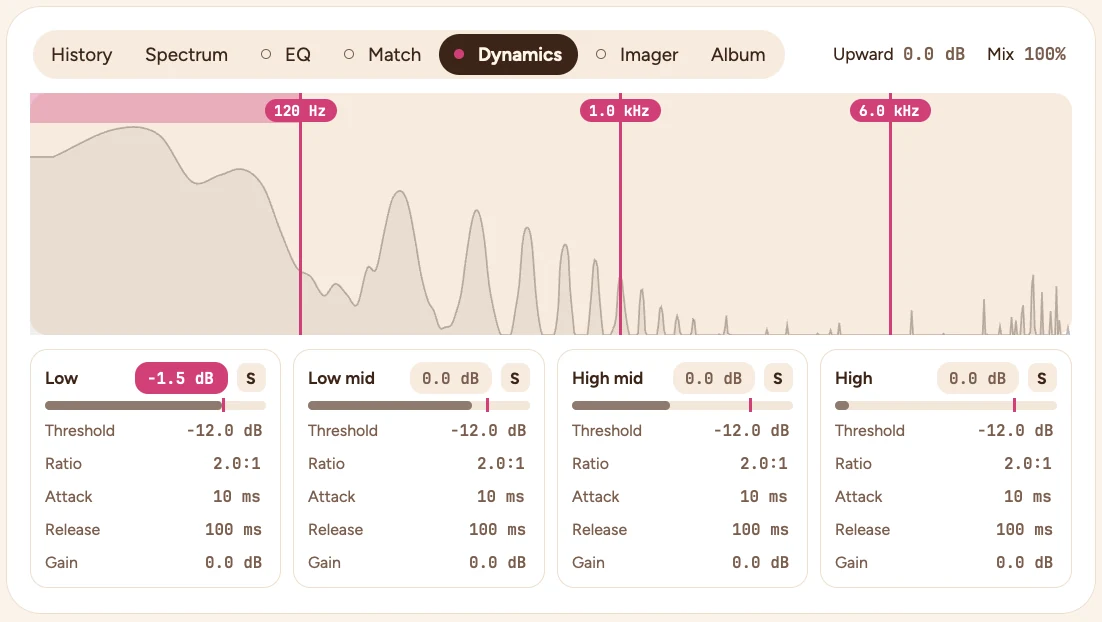
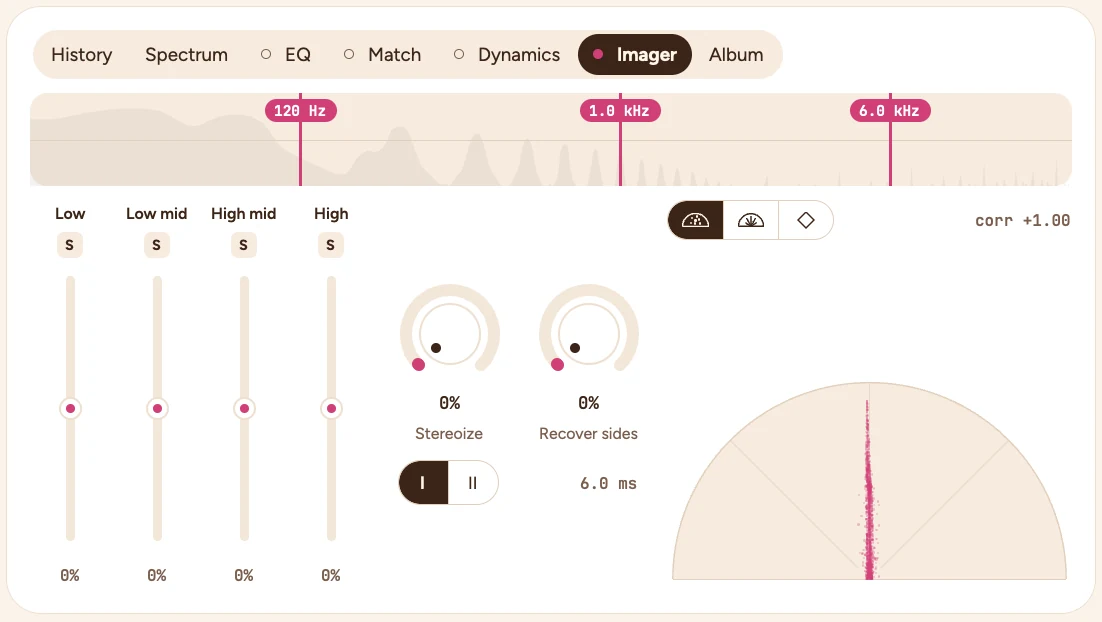
The dot on a tab is its module's switch: lit while it works, click it to bypass.
Listen
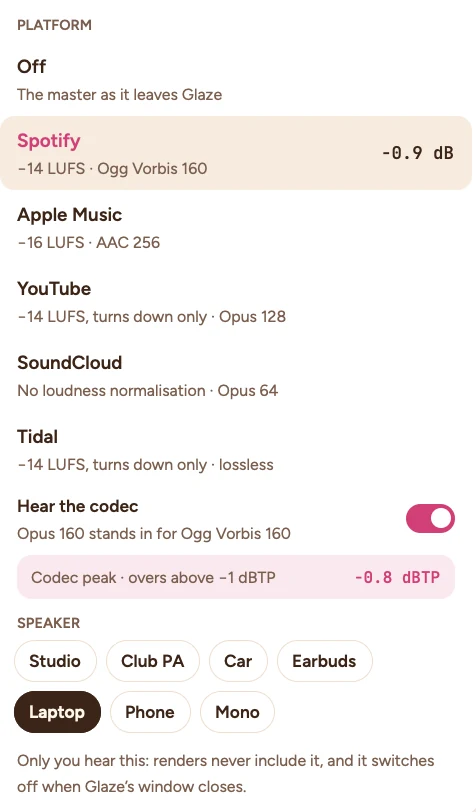
Turn the master down the way each platform does, run it through a real lossy codec, and play it on a car, earbuds or a phone. It never touches your render.
−0.8 dBTPGlaze shows the true peak after the codec, so you see the overs lossy coding adds to a −1.0 master before a listener hears them.
Meters and reference
Momentary, short-term and gated integrated loudness, LRA, 4× true peak and PSR, to BS.1770-4 and EBU R128. Aim at Club −6 or Stream −14.
Twelve seconds of input and output, with clip and limit gain reduction drawn separately, so you can see which stage is doing the work.
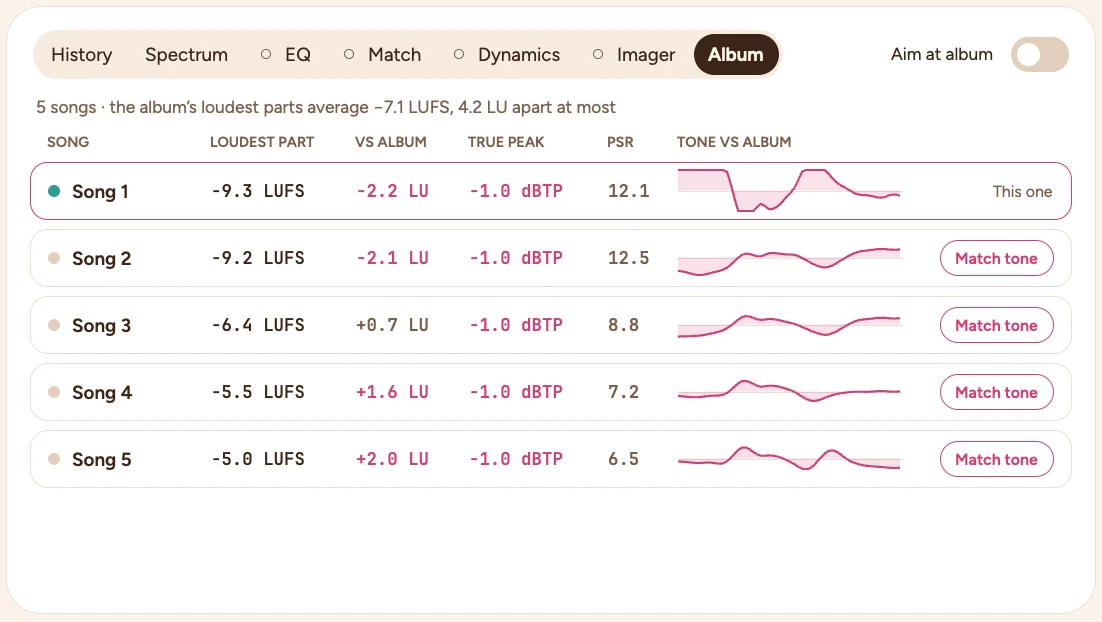
Drop a WAV, AIFF, FLAC, MP3 or M4A. Glaze measures its loudest 12 s, aims at its level, and swaps to it at its own loudness when you click REF.
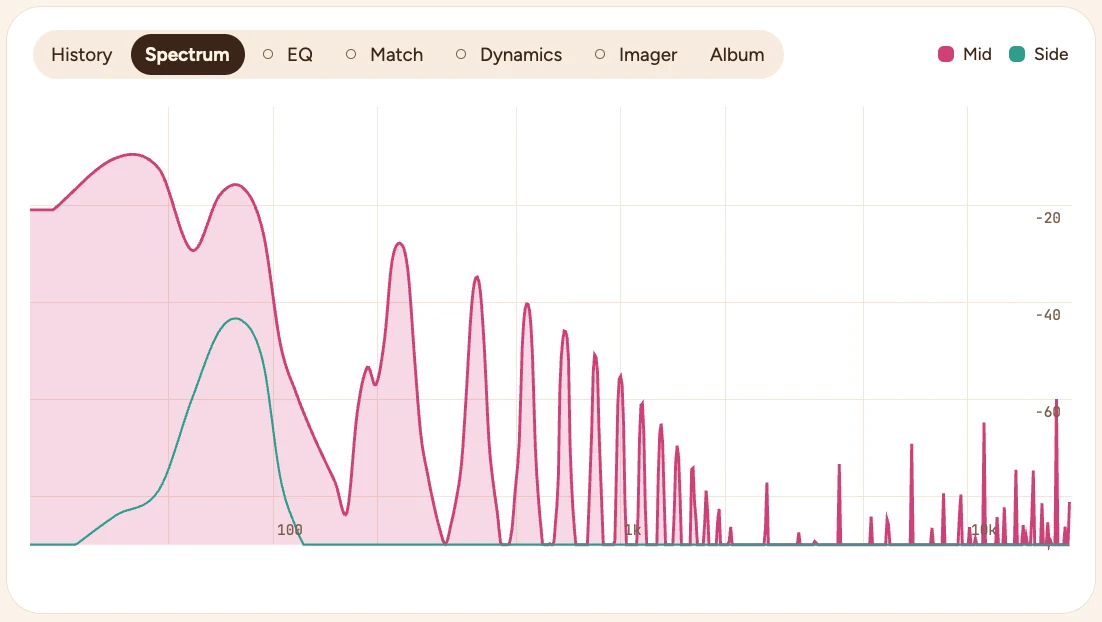
Sub mono correlation, and the sub's fundamental as Hz and a note name, so you know the low end sits where you think it does.
Plays the dry input at the output's short-term loudness, so louder never fools you into thinking better.
Two slots to compare, and factory presets from Riddim Slam and DnB Club to Melodic Clean and Streaming Safe.
Download
VST3 and CLAP, for any host that loads them: Ableton Live, FL Studio, Bitwig, Reaper and more.
Glaze runs at any sample rate up to 192 kHz, with a fixed 6.0 ms latency at 48 kHz.